Planning to install an awning at home or at your business? Before choosing a design, it helps to understand what affects the overall cost. An awning can make an outdoor area more comfortable, provide shade from direct sunlight and offer some protection from rain. However, the cost of installing one can vary considerably depending on the type of awning, the size of the area and the requirements of the property.
For anyone looking for an awning in Singapore, there is no single solution that suits every space. A small awning above a window has different requirements from a large retractable awning covering a patio or an outdoor dining area.
Rather than choosing based on price alone, it is worth looking at the factors that influence the total cost. This will help you compare options more realistically and find an awning that meets your needs.
1. The Size of the Awning
One of the first factors affecting awning cost is the size of the area you want to cover.
A larger awning generally requires more material and a suitable supporting structure. The width, projection and overall coverage will all influence the design and installation requirements.
For example, an awning intended to shade a small window may need much less coverage than one designed for a landed property patio or a restaurant’s outdoor seating area.
Before requesting a quotation, consider how you intend to use the space. Do you want to shade a few chairs, protect an entrance or cover a larger outdoor area where people regularly gather?
Having a clear idea of your requirements makes it easier for an awning supplier to recommend a suitable size without providing more coverage than you actually need.
2. The Type of Awning You Choose
Different awning systems serve different purposes, and the type you select can affect the overall investment.
A fixed awning provides permanent coverage, making it worth considering for locations where consistent shelter is the main priority. A retractable awning offers more flexibility because you can extend it when shade is needed and retract it when you prefer an open outdoor space.
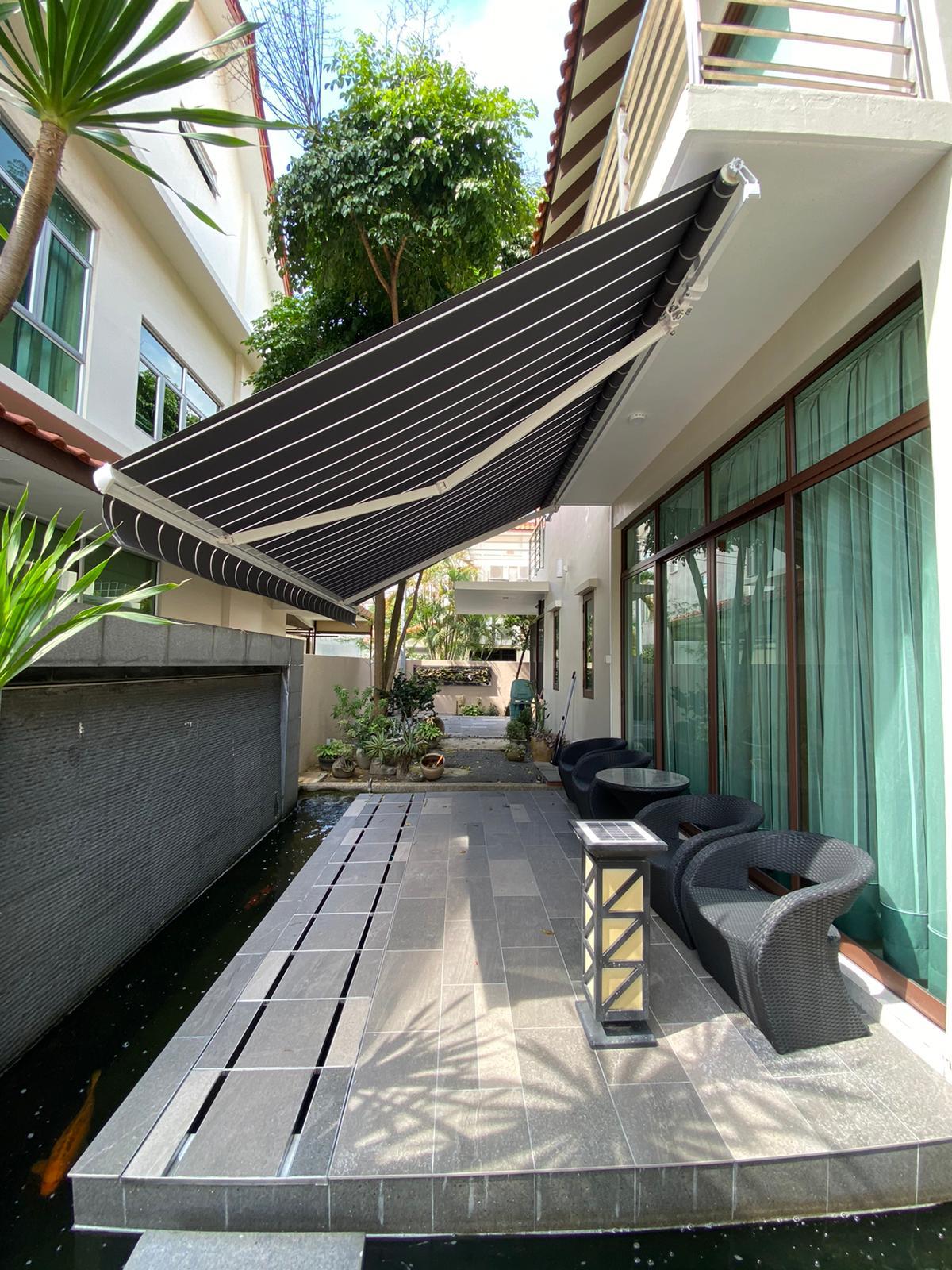
For homeowners who enjoy spending time outdoors, a retractable awning can be a practical option for patios, balconies and terraces. Businesses may also consider retractable systems for outdoor dining areas or other spaces where flexible shading is useful.
However, retractable systems have moving components that need to be considered as part of the design. The most suitable choice depends on your available space, how often the awning will be used and the level of flexibility you want.
When comparing an awning in Singapore, make sure you are comparing systems with similar coverage, specifications and operating features.
3. Fabric, Frame and Material Quality
The materials used in an awning influence its appearance, performance and long-term upkeep.
Outdoor awnings in Singapore are exposed to strong sunlight, humidity and frequent rainfall. The suitability of the fabric, frame and other components should therefore be considered carefully.
When discussing materials with a supplier, ask about their suitability for outdoor use, ease of cleaning and expected maintenance requirements. It is also worth considering how the material and colour will look against the building’s exterior.
A lower initial price may seem attractive, but the cheapest option is not necessarily the most suitable for your property. The aim is to find a balance between cost, durability, appearance and everyday practicality.
Choosing materials that suit the installation location can help you make a more informed decision.
4. Manual or Motorised Retractable Awning?
If you are considering a retractable awning, another decision is whether to choose manual or motorised operation.
A manual retractable awning is operated using a hand crank. This may be suitable for smaller installations or outdoor areas where the awning is only opened occasionally.
A motorised retractable awning offers greater convenience, allowing you to extend or retract the covering using a switch or remote control, depending on the system. This can be especially useful when the awning is large or used frequently.
Motorised operation may add to the initial cost, so consider whether the extra convenience is worthwhile for your intended use.
For example, a homeowner who opens the awning every afternoon may appreciate the convenience of a motorised system. Someone who only needs occasional shade may prefer a simpler arrangement.
The best option is the one that fits your routine, budget and installation requirements.
5. Installation Location and Site Conditions
Two properties may require different installation approaches even if their awnings are similar in size.
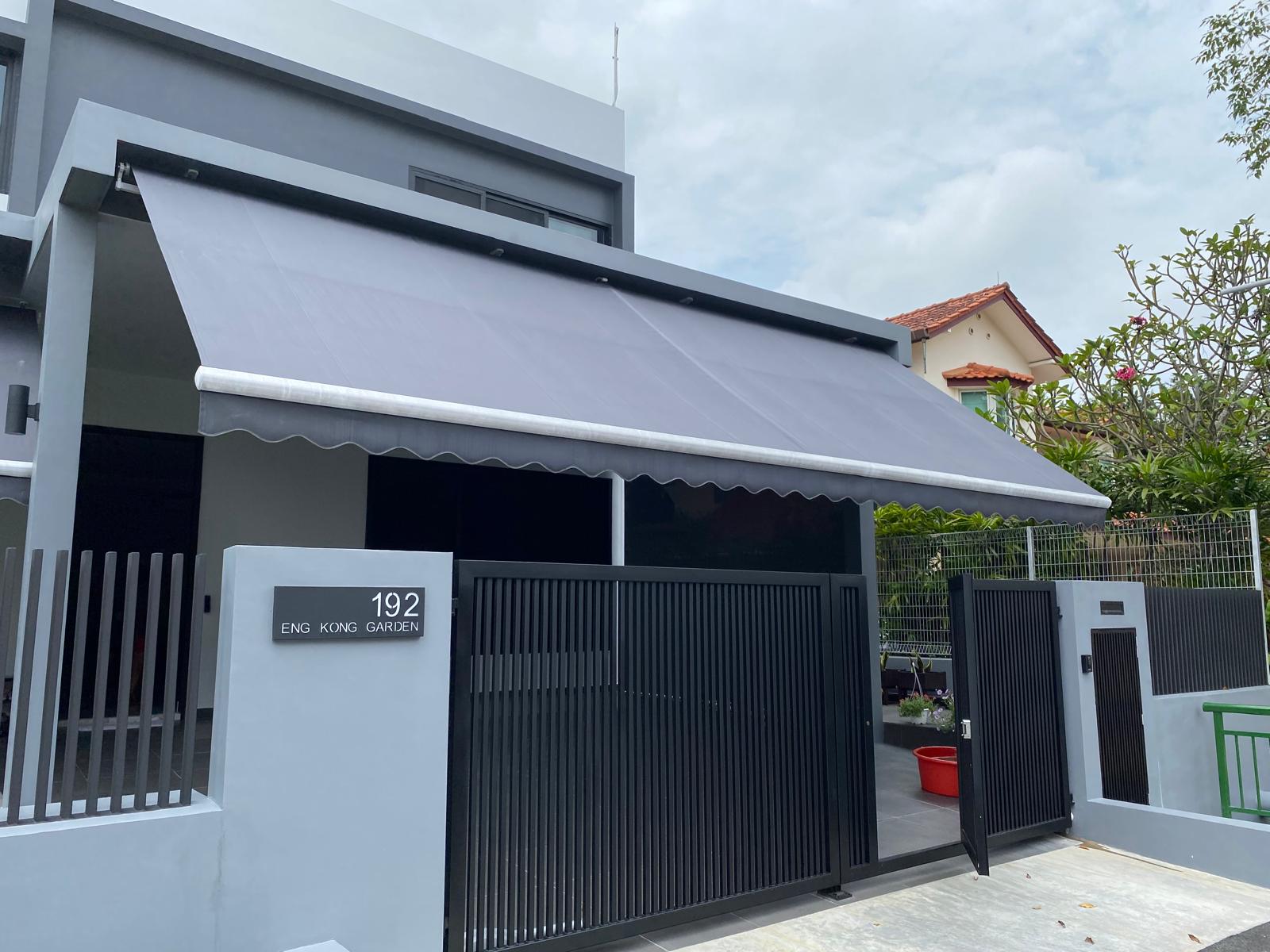
The mounting surface, available space, surrounding structures and accessibility of the installation area can all affect the work involved. An awning installed above a shop entrance may have different requirements from one fitted over a residential patio.
The installer will also need to consider the position of windows, doors, existing roofing and other features that could affect how the awning operates.
For a retractable awning, there must be sufficient clearance for the system to extend and retract properly. The mounting arrangement must also be appropriate for the particular structure.
This is why it is helpful to have the installation location assessed before confirming the final specifications. A site assessment can identify practical issues early and reduce the likelihood of unexpected changes during installation.
6. Customisation and Design Preferences
An awning should work well with the property, not look like an afterthought.
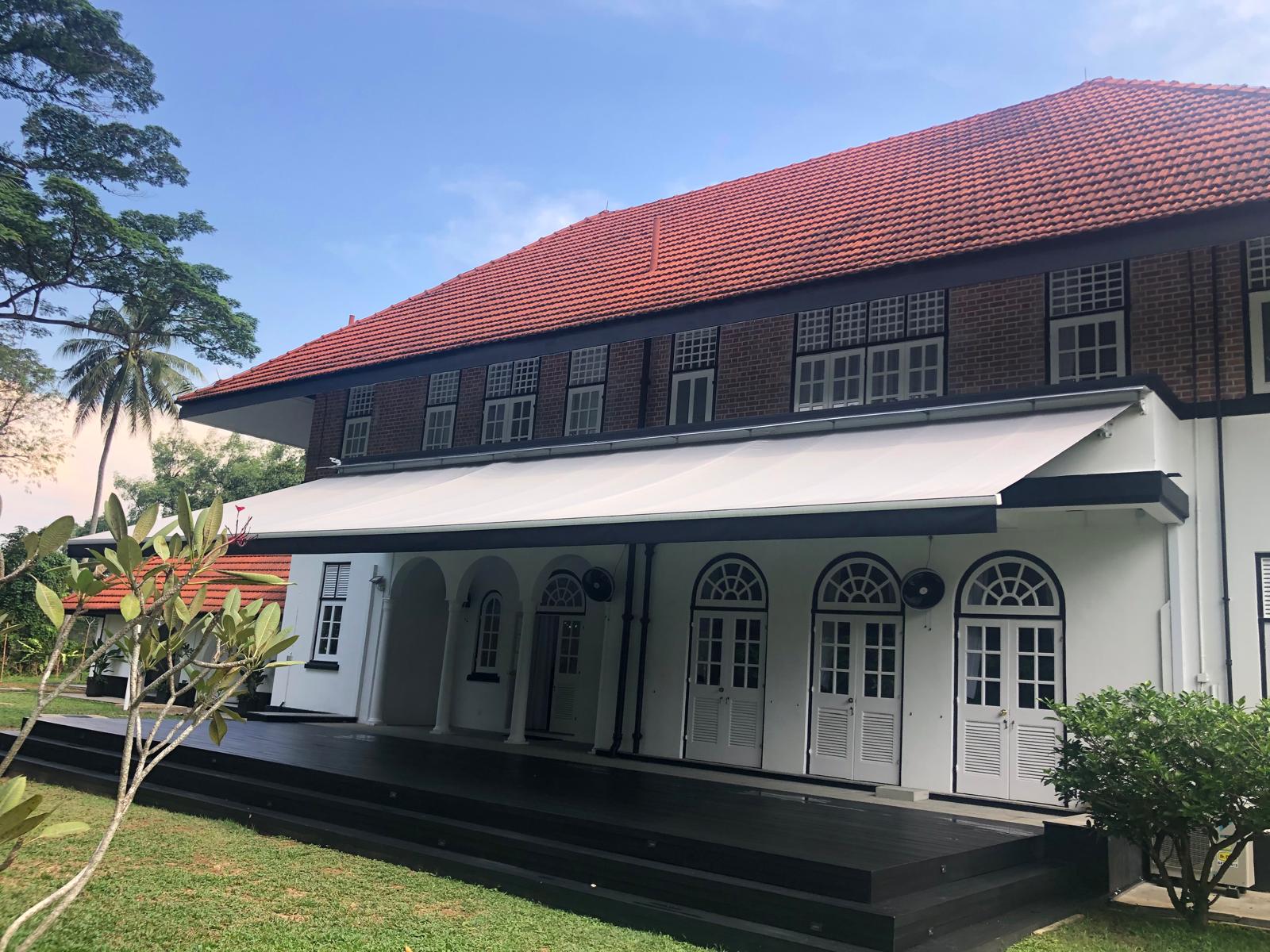
Colour, fabric appearance, frame design and the amount of coverage can all influence the final selection. Some homeowners prefer an awning that blends into the exterior, while others want it to become a feature of the outdoor area.
Commercial properties may have additional considerations. A café, restaurant or retail outlet may want the awning to complement its branding and overall appearance.
Custom requirements can affect the final quotation, depending on the design and specifications involved. It is useful to establish which features are essential and which are simply preferences.
If you are working within a budget, discuss your priorities with the supplier. A suitable design should meet your practical requirements while complementing the property.
7. Maintenance and Long-Term Considerations
The initial installation cost is only one part of choosing an awning. It is also worth considering the care and maintenance it may require over time.
Outdoor awnings can collect dust, leaves and other debris. Fabric, frames and moving components should be checked periodically, particularly if the system is used frequently.
Retractable awnings need additional attention to their operating mechanisms. If the awning becomes difficult to open or close, it is better to have the issue checked rather than repeatedly forcing the mechanism.
You should also follow the manufacturer’s operating recommendations during heavy rain or strong winds. Not every awning is designed to withstand the same weather conditions, and a retractable awning should be used within its specified limits.
When comparing quotations, ask about the applicable warranty, maintenance recommendations and any after-sales support available. These details can help you understand the longer-term responsibilities associated with your purchase.
Is a Retractable Awning Worth the Investment?
For many properties, the main attraction of a retractable awning is flexibility. You can create shade when you need it without permanently covering the outdoor area.
This can be useful for a patio used for family meals, a balcony where you want to control direct sunlight, or an outdoor dining area that benefits from adaptable coverage.
A retractable awning may not be necessary for every situation. If you require permanent shelter, another type of awning or roofing system may be more appropriate. The right decision depends on how the space is used and what you expect the installation to achieve.
Before deciding, consider the size of the area, the amount of shade required, the preferred operating method and the conditions at the installation site. These details provide a more useful starting point than price alone.
Getting an Awning Quotation in Singapore
If you are comparing awning quotations in Singapore, try to provide each supplier with the same basic information. This makes it easier to understand what is included in each proposal.
Useful details include the approximate dimensions of the area, photographs of the installation location, your preferred awning type and whether you want manual or motorised operation.
You can also ask the supplier to clarify the proposed materials, installation scope, warranty coverage and any additional work that may be required.
At Elite Deco Pte Ltd, we provide awning and outdoor shading solutions for residential and commercial applications. With more than 15 years of industry experience, our services cover consultation, design, supply, installation and maintenance. Our range includes retractable awnings and other outdoor shading systems to suit different property requirements.
Whether you are planning to shade a balcony, patio, shopfront or commercial outdoor area, understanding your requirements is the first step towards finding a suitable solution.
Find the Right Awning for Your Space
Choosing an awning is about more than finding the lowest quotation. The size, materials, operating system and installation conditions all play a part in determining which solution is right for your property.
If you are looking for an awning in Singapore, take the time to compare the specifications and consider how the awning will be used in everyday life. A well-planned installation can make your outdoor space more comfortable and functional while complementing the appearance of your property.
Contact Elite Deco Pte Ltd to discuss your awning requirements and find a suitable solution for your outdoor space.